
Friday, January 10, 2025
Innovation one pager statement, Traditional Artisan Inclusion model by African Continental Crafts


Monday, October 7, 2024
Insights and perspectives by Stephen Rwagweri as a speaker in global impact discussion
 |
| Stephen Rwagweri |
Stephen Rwagweri holds under represented insights and perspectives on deepening social impact and driving universal inclusion especially using artisanal sector which is globally an engine of livelihood, springboard of grassroots innovations and potential to drive inclusion that continues to be a subject of tokenism and blind spot in impact investing and policy discussion. His insights and perspectives are informed by a strong passion and a long career built on assembling innovative energies to drive universal inclusion. His over 20 years professional experience has involved research, reflection, designing and scaling innovations around culture and artisan heritage as a tool of inspiring resilience, driving equitable livelihood and universal inclusion while working with major development organizations including UNESCO, Commonwealth Foundation, HIVOS, CIDA among others.
He identifies undiscovered sector potentials to drive universal economic inclusion and ignite a reflection on unnoticed possibilities. Coming from a long career of working with the populations which are resigned in severe limitations and deprivation where himself belonged and ride a theory of change to resilience and equitable livelihood, he shares tactics of disrupting systemic despair and inspiring a belief in possibilities. He delivers his message through story telling using case studies and field data.
1. Artisanal sector globally is uniquely positioned to drive universal economic equity and inclusion.
It is socially and geographically universal human production sector, second to agriculture in providing for livelihoods at grassroots.
Artisanal sector can be adapted to the most resource deprived like the refugees, the landless, the stateless and the displaced who cannot access land for agriculture and reclaim them to competitive productivity.
Artisanship is a production sector which integrates the highest content of social, spiritual and therapeutic values and hence able to uplift the wellbeing of people with physical discomfort.
Artisanal sector is naturally adapted to driving gender balance and geographical equity as it is predominantly up to 90% an economy of female gender and survives in underserved geographies.
The artisanal business operate at the intersection of priority impact sectors and themes including improving livelihood at grassroots, advancing gender balance and women economic emancipation, job creation, promotion of women entrepreneurship, culture preservation and enhancing climate change resilience
Artisanal practices is a space that inspire human imaginations and creativity around all aspects of socio-economic life. And therefore, when this space is developed can ignite social innovations in diverse socioeconomic aspects among the population at grassroots
There is growing passionate connection between people and handmade products because, in addition to their practical utility, they also tell a human story, symbolize direct human touch and their processes of production and utilization do not launch any attack to human beings and nature through exploitation of labour, materials neither releasing emissions.
Friday, September 20, 2024
Tuesday, September 10, 2024
Stephen Rwagweri of African Continental Crafts to Speak at Masters of Scale Summit 2024

The Masters of Scale Summit 2024 is set to shine a spotlight on African innovation and entrepreneurship as Stephen Rwagweri, the esteemed founder and CEO of African Continental Crafts, joins as one of the event’s distinguished speakers.

Hailing from Fort Portal, Uganda, Rwagweri has been at the forefront of transforming traditional artisanal practices into market-viable goods, fostering economic inclusion, and empowering local communities. His work with African Continental Crafts has opened new opportunities for artisans, connecting them to global markets and promoting the rich cultural heritage of Africa through crafts.
Rwagweri’s participation at the summit is highly anticipated, given his remarkable achievements as a social entrepreneur and cultural expert. He has successfully leveraged traditional crafts to create sustainable livelihoods for artisans, demonstrating how cultural heritage can drive economic development. His insights on utilizing local skills and traditions to foster economic growth and community resilience align perfectly with the themes of innovation and social impact central to the Masters of Scale Summit.
As a prominent speaker on global stages, Rwagweri’s address is expected to inspire and challenge other entrepreneurs to think creatively about leveraging Indigenous knowledge and resources for economic development. His presence at the summit underscores the growing recognition of Africa’s potential to shape the future of global markets through unique and culturally significant products.
Alongside Rwagweri, the summit will feature a select group of 40 early-stage founders who are making significant strides in their industries. Among them is Brandice Daniel, CEO and Founder of Harlem’s Fashion Row, who is dedicated to promoting diversity in the fashion industry. Her collaboration with top brands amplifies the voices of designers of color and fosters inclusive practices, making her a transformative figure in the fashion world.
Also joining the summit is Bolaji Akinboro, Co-Founder of Tórónet, who leads innovation in the FinTech and DeFi sectors across emerging markets. Akinboro utilizes blockchain technology to drive inclusive economic growth and digital transformation in Africa and beyond, positioning himself as a trailblazer in the industry.
Candice Edwards, CEO and Co-Founder of Ellevoy, is another notable attendee. Her community-focused B2B SaaS platform connects emerging founders with essential resources, fostering innovation and growth in startup ecosystems, particularly for underrepresented entrepreneurs. Her leadership in the tech and venture capital landscape highlights the importance of supporting diverse founders and building inclusive networks.
Supported by Capital One Business, the early-stage founder cohort at the summit is poised to forge valuable connections, share insights, and catalyze positive change in their respective fields. The presence of these exceptional founders, along with other inspiring individuals like Dana Griffin and Cedric Lipsey, promises to redefine industry standards, challenge traditional norms, and pave the way for a more inclusive and innovative future.
As the Masters of Scale Summit 2024 unfolds, the stories of these visionaries, including Stephen Rwagweri, serve as a testament to the power of entrepreneurship, diversity, and collaboration in driving meaningful impact worldwide. The summit will be a fertile ground for new ideas, partnerships, and inspiring journeys that will shape the future of industries across the globe.
Saturday, April 20, 2024
Ugandan Culture Expert on UNESCO Panel at Abu Dhabi Summit
 |
| Stephen Rwagweri (2nd left) in Abu Dhabi |
Kampala, Uganda - Stephen Rwagweri, Executive Director of Engabu Za Tooro and Founder of African Continental Crafts, recently returned from Abu Dhabi where he participated in a prestigious UNESCO panel discussion.
The
6th edition of the Culture Summit Abu Dhabi, held from March 3rd to 5th, 2024,
explored the theme "A Matter of Time." Rwagweri was selected as one
of six culture experts to join a UNESCO panel focused on the role of living
heritage.
"I
was happy to participate in this important discussion," Rwagweri said.
"Living heritage is the bridge between our past traditions and the
present. It's how we ensure our cultural practices continue to thrive in a
changing world."
Abu
Dhabi Culture Summit is a major international event that gathers thought leaders
from various fields related to art, heritage, and culture. This year's summit
focused on how culture can help us navigate a changing world and develop a new
understanding of time.
Rwagweri's
participation highlights the important role Ugandan culture plays on the
international stage. Engabu Za Tooro, the organization he leads, works to
preserve and promote the traditional crafts of Uganda. His founding of African
Continental Crafts further demonstrates his commitment to showcasing the
continent's rich artistic heritage.
Ugandan Culture Expert on UNESCO Panel at Abu Dhabi Summit

Stephen Rwagweri (2nd left) in Abu Dhabi
Kampala,
Uganda - Stephen Rwagweri, Executive Director of Engabu Za Tooro and Founder of
African Continental Crafts, recently returned from Abu Dhabi where he
participated in a prestigious UNESCO panel discussion.
The
6th edition of the Culture Summit Abu Dhabi, held from March 3rd to 5th, 2024,
explored the theme "A Matter of Time." Rwagweri was selected as one
of six culture experts to join a UNESCO panel focused on the role of living
heritage.
"I
was happy to participate in this important discussion," Rwagweri said.
"Living heritage is the bridge between our past traditions and the
present. It's how we ensure our cultural practices continue to thrive in a
changing world."
Abu
Dhabi Culture Summit is a major international event that gathers thought leaders
from various fields related to art, heritage, and culture. This year's summit
focused on how culture can help us navigate a changing world and develop a new
understanding of time.
Rwagweri's
participation highlights the important role Ugandan culture plays on the
international stage. Engabu Za Tooro, the organization he leads, works to
preserve and promote the traditional crafts of Uganda. His founding of African
Continental Crafts further demonstrates his commitment to showcasing the
continent's rich artistic heritage.
Sunday, February 25, 2024
UNESCO Culture Expert Stephen Rwagweri to Share Insights at Abu Dhabi Culture Summit
 |
| Stephen Rwagweri |
Fort Portal, Uganda – February 25, 2024 – Renowned UNESCO culture
expert, Executive Director of Engabu Za Tooro, and Founder of African
Continental Crafts, Stephen Rwagweri, will bring his expertise to the Abu Dhabi Culture
Summit taking place from March 3rd to 5th, 2024.
Rwagweri,
a leading figure in cultural preservation and development, is set to participate as a speaker and panelist at the summit. This prestigious event will convene brilliant minds, creative thinkers, and cultural enthusiasts from across the globe to engage in thought-provoking discussions on the intersection of culture and the
evolving world.
Rwagweri's
presence at the summit is a testament to his dedication to promoting cultural
understanding, sustainability, and inclusivity. As the founder of African Continental Crafts
and the Executive Director of Engabu Za Tooro, Rwagweri has played a pivotal role in empowering traditional artisans and preserving cultural heritage.
The
Abu Dhabi Culture Summit presents a unique opportunity for Rwagweri to
share his valuable insights and engage in
collaborative dialogues with other cultural
leaders. His participation is expected to spark meaningful
discussions and potentially lead
to fruitful collaborations aimed at advancing cultural
progress on a global scale.
Tuesday, December 26, 2023
Engabu Za Tooro Executive Director and African Continental Crafts Founder, Stephen Rwagweri officially adopted in the UNESCO's global network of ICH facilitators
 |
| Stephen Rwagweri attending the meeting |
Stephen Rwagweri has been officially adopted in the UNESCO's global network of ICH facilitators during the 4 days UNESCO's global network of ICH facilitators meeting in Doula Cameroon from 18th to 21st December, 2023. In the meeting, Africa was represented by Uganda, Kenya, Zambia and Burkina Faso and each country was represented by one delegate. Uganda was represented by Stephen Rwagweri.
Mr Stephen Rwagweri was officially adopted in the UNESCO's global network of ICH facilitators. He specializes in development of artisanal and cultural enterprises, designing innovations in artisanal sector and facilitating implementation of UNESCO core ICH mechanisms including inventories, nominations, programme elaboration, implementation, and project and periodic reporting throughout the world in countries which have ratified the UNESCO’s 2003 Convention. According to Stephen, “Through this UNESCO global network of ICH facilitators, we hope to access public mechanisms to support social impact scaling of our African Continental Crafts enterprise and other enterprises specializing in development of artisanal and cultural enterprises, designing innovations in artisanal sector and facilitating implementation of UNESCO core ICH mechanisms”
 |
| UNESCO Certificate |
Capacity building is one of the five functions that UNESCO performs to fulfill its mandate. As such, one of the top priorities for implementing the 2003 Convention for the Safeguarding of the Intangible Cultural Heritage is its global capacity-building programme. The Programme was put in place in 2009 to support countries in safeguarding their intangible cultural heritage and harness its potential for sustainable development, while promoting broad public knowledge and support for the Convention.
The 2003 Convention places communities at the center of all its safeguarding activities. The capacity-building programme takes an inclusive approach to ensure the widest possible participation of all relevant stakeholders, especially relevant community groups, in the design and implementation of safeguarding activities.
The capacity building program develops community-based inventorying and safeguarding methods, supports the ability of States to effectively implement the Convention, integrate the safeguarding of intangible cultural heritage into sustainable development plans, policies and programmes at all levels, strengthens institutional frameworks to help safeguard intangible cultural heritage and enhances monitoring for the implementation of the Convention.
 |
| Stephen Rwagweri in Doula, Cameroon |
The Programme offers capacity-building services at country level, combining training, advisory services, stakeholder consultation and pilot activities. These can be adapted to specific country needs and thematic topics, always with the view to ensuring the continued impact and sustainability of safeguarding measures at national level.
Sunday, December 10, 2023
Empaako Heritage Advocate, Ms. Jane Benuza Set to Make Waves at UNESCO Global Meeting
To read more about the story, follow this link here
Empowering Women Artisans, A Collaborative Journey with Vital Voices Global Partnership
To read more about the story, follow this link http://www.africancontinentalcrafts.com/empowering-women-artisans-a-collaborative-journey-with-vital-voices-global-partnership/
Saturday, July 1, 2023
Presentation made during the online conversation to establish partnership for implementation of Traditional Artisan Inclusion model
Access the presentation by clicking here
Thursday, June 22, 2023
Monday, April 24, 2023
Stephen Rwagweri attends an expert meeting on a broader implementation of Article 18 of the Convention

Stephen Rwagweri in a group photo
A group of experts from all regions of the world are meeting in Stockholm, Sweden from 19 to 21 April 2023 to explore how to share good safeguarding experiences of living heritage more broadly and how to bring to the fore the voices of communities and their aspirations for safeguarding their living heritage.
During the global reflection on the listing mechanisms of the 2003 Convention (2018-2022), the sixteenth session of the Intergovernmental Committee in 2021 (Decision 16.COM 14) decided to launch a separate reflection to explore the full potential of Article 18 of the Convention.
The idea is not only to continue discussing issues raised during the previous Global Reflection concerning the Register of Good Safeguarding Practices, but also to pay attention to the implementation of Article 18 of the Convention beyond the Register.
The expert meeting is expected to lay the ground for the upcoming discussion on the subject by the Open-ended intergovernmental working group, which is scheduled to meet from 4 to 7 July 2023 (UNESCO Headquarters).
Additional photos from the meeting
 |
| Stephen Rwagweri at the meeting |

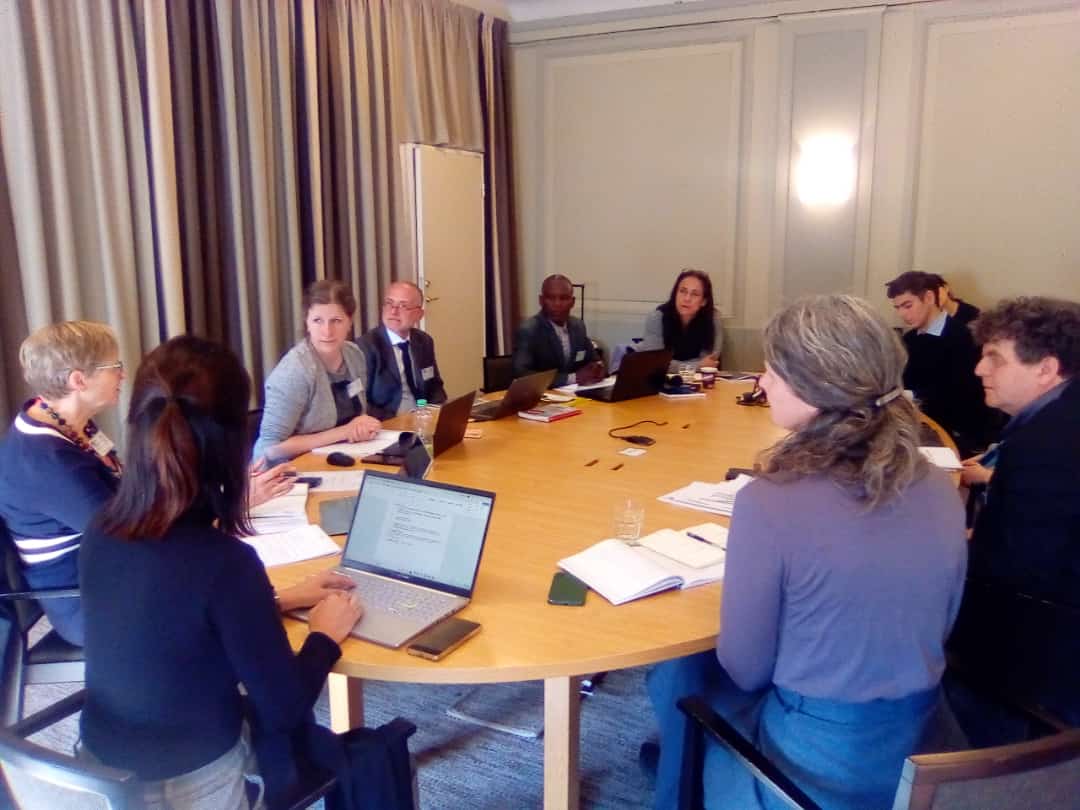 |
| Group session |
This reflection is generously supported by Sweden.
See the dedicated webpage for further information:
Saturday, January 28, 2023
African Continental Crafts becomes a member of Good Market

African Continental Crafts has become a member of Good Market which is part of Catalyst Market. The membership enables African Continental Crafts to use Good Market online platform to sell its craft products to the global market.
“African
Continental Crafts Ltd” is a for profit social enterprise
is incorporated in Uganda and having a business focus on the artisan sector across
Africa. The enterprise was started and incubated by Engabu Za Tooro, a Uganda
NGO.
African Continental Crafts membership was approved in December, 2022 with other 37 social enterprises, cooperatives, responsible businesses, civic organizations, and networks.
The new members which were approved are from Canada, the United States, Mexico, Eswatini, Uganda, Kenya, Syria, Germany, Netherlands, India, and Sri Lanka.
More than 2,603 enterprises across 91 countries are now part of the Good Market
Good Market is a curated community of social enterprises, cooperatives, responsible businesses, civic organizations, networks, and change makers. Good Market focuses on working collaboratively to create a 21st century economy that is good for people and good for the planet.
Catalyst Market is a collaborative project of Catalyst 2030 which connects conscious makers with shoppers. The marketplace features products of leading social enterprise brands from around the world.
Tuesday, January 3, 2023
African Continental Crafts Doreen Kiconco was selected for 2023 VV Grow Fellowship at Vital Voices
At African Continental Crafts, which is a social enterprise incubated by Engabu Za Tooro, we are excited to share that our own Doreen Kiconco was selected for 2023 VV Grow Fellowship at Vital Voices. She has joined 99 fellow women entrepreneurs from around the world in a 10 months’ accelerator that involve customized business and leadership training and connecting to global network and ecosystem of women leadership and entrepreneurship for impact. Join us for this journey to accelerate our shared vision for change and growth #VVGROW
Doreen Kiconco
Friday, December 2, 2022
Rwagweri participates in the examination of UNESCO files in the 17th UNESCO Session
 |
| Stephen Rwagweri |
The files which were examined are reports by States Parties on the current status of elements inscribed on the List of Intangible Cultural Heritage in Need of Urgent Safeguarding, reports of the first cycle of periodic reporting on the implementation of the Convention and on the current status of elements inscribed on the Representative List of the Intangible Cultural Heritage of Humanity by States Parties in Europe,
Reports by States Parties on the use of International Assistance from the Intangible Cultural Heritage Fund.
Others are report of the Evaluation Body on its work in 2022, nominations for inscription on the List of Intangible Cultural Heritage in Need of Urgent Safeguarding, nominations for inscription on the Representative List of the Intangible Cultural Heritage of Humanity, proposals to the Register of Good Safeguarding Practices, requests for International Assistance, follow-up on elements inscribed on the Lists of the Convention, Report of the non-governmental organizations forum and strategy for the monitoring, evaluation and identification of lessons learnt for International Assistance projects
Engabu Za Tooro inscribed two elements in UNESCO’s ICH list which are Empaako and Koogere Oral Traditions. Empaako Oral Tradition received UGX 1 billion from UNESCO’s International Assistance Fund to revitalize it which was successfully implemented
Stephen Rwagweri is the Executive Director of Engabu Za Tooro (Tooro Youth Platform for Action) and CEO of “African Continental Crafts Ltd” which is a for profit social enterprise incorporated in Uganda and having a business focus on the artisan sector across Africa.
Engabu Za Tooro was accredited by UNESCO to provide advisory services to the Intergovernmental Committee for the Safeguarding of Intangible Cultural Heritage and has since facilitated implementation of the UNESCO Convention.
Monday, November 28, 2022
Rwagweri gets a rare moment to meet with the UNESCO Director General, Ms Audrey Azoulay
 |
| Rwagweri with UNESCO boss |
Rwagweri is attending the seventeenth
session of the Intergovernmental Committee for the Safeguarding of the
Intangible Cultural Heritage will be hosted by the Kingdom of Morocco in Rabat
(Sofitel Rabat Jardin des Roses) from 28 November to 3 December 2022.
Audrey Azoulay was elected as the Director-General of UNESCO since
2017, becoming the second female leader of the organization. She previously
served as France's Minister of Culture in the
government of Prime Minister Manuel Valls from
2016 to 2017.
UNESCO is a specialized global agency of the United Nations (UN) aimed at promoting world peace and security through international cooperation in education, arts, sciences and culture. It has 193 member states and 12 associate members, as well as partners in the non-governmental, intergovernmental and private sector. Headquartered at the World Heritage Centre in Paris, France, UNESCO has 53 regional field offices and 199 national commissions that facilitate its global mandate.
UNESCO was founded in 1945 as the successor to the League of Nations's International Committee on Intellectual Cooperation. Its constitution establishes the agency's goals, governing structure, and operating framework. UNESCO's founding mission, which was shaped by the Second World War, is to advance peace, sustainable development and human rights by facilitating collaboration and dialogue among nations. It pursues this objective through five major programme areas: education, natural sciences, social/human sciences, culture and communication/information. UNESCO sponsors projects that improve literacy, provide technical training and education, advance science, protect independent media and press freedom, preserve regional and cultural history, and promote cultural diversity.
 |
| Rwagweri at the opening ceremony |
As a focal point for world culture and science, UNESCO's activities have broadened over the years; it assists in the translation and dissemination of world literature, helps establish and secure World Heritage Sites of cultural and natural importance, works to bridge the worldwide digital divide, and creates inclusive knowledge societies through information and communication. UNESCO has launched several initiatives and global movements, such as Education for All, to further advance its core objectives.
UNESCO is governed by the General Conference, composed of member states and associate members, which meets biannually to set the agency's programs and the budget. It also elects members of the executive board, which manages UNESCO's work, and appoints every four years a Director-General, who serves as UNESCO's chief administrator. UNESCO is a member of the United Nations Sustainable Development Group, a coalition of UN agencies and organizations aimed at fulfilling the Sustainable Development Goals.
Rwagweri arrives in Morocco for the 17th UNESCO Session
 |
| Stephen Rwagweri |
Stephen Rwagweri arrived in Rabat, Morocco yesterday to attend the 17th Session of UNESCO’s of the Intergovernmental Committee for the Safeguarding of the Intangible Cultural Heritage.
Rwagweri yesterday attended the opening ceremony which took place at the Royal Club Equestre Dar Essalam in Rabat.
During the meeting, delegates will examine requests for International Assistance up to US$100,000, follow-up on elements inscribed on the Lists of the Convention and Rwagweri will be formally adopted into a global pool of experts who UNESCO presents to governments all over the world to provide consultancies to UNESCO’s ICH projects
Stephen Rwagweri is the Executive Director of Engabu Za Tooro (Tooro Youth Platform for Action) and CEO of “African Continental Crafts Ltd” which is a for profit social enterprise incorporated in Uganda and having a business focus on the artisan sector across Africa.
Engabu Za Tooro was accredited by UNESCO to provide advisory services to the Intergovernmental Committee for the Safeguarding of Intangible Cultural Heritage and has since facilitated implementation of the UNESCO Convention.
Subscribe to:
Posts (Atom)